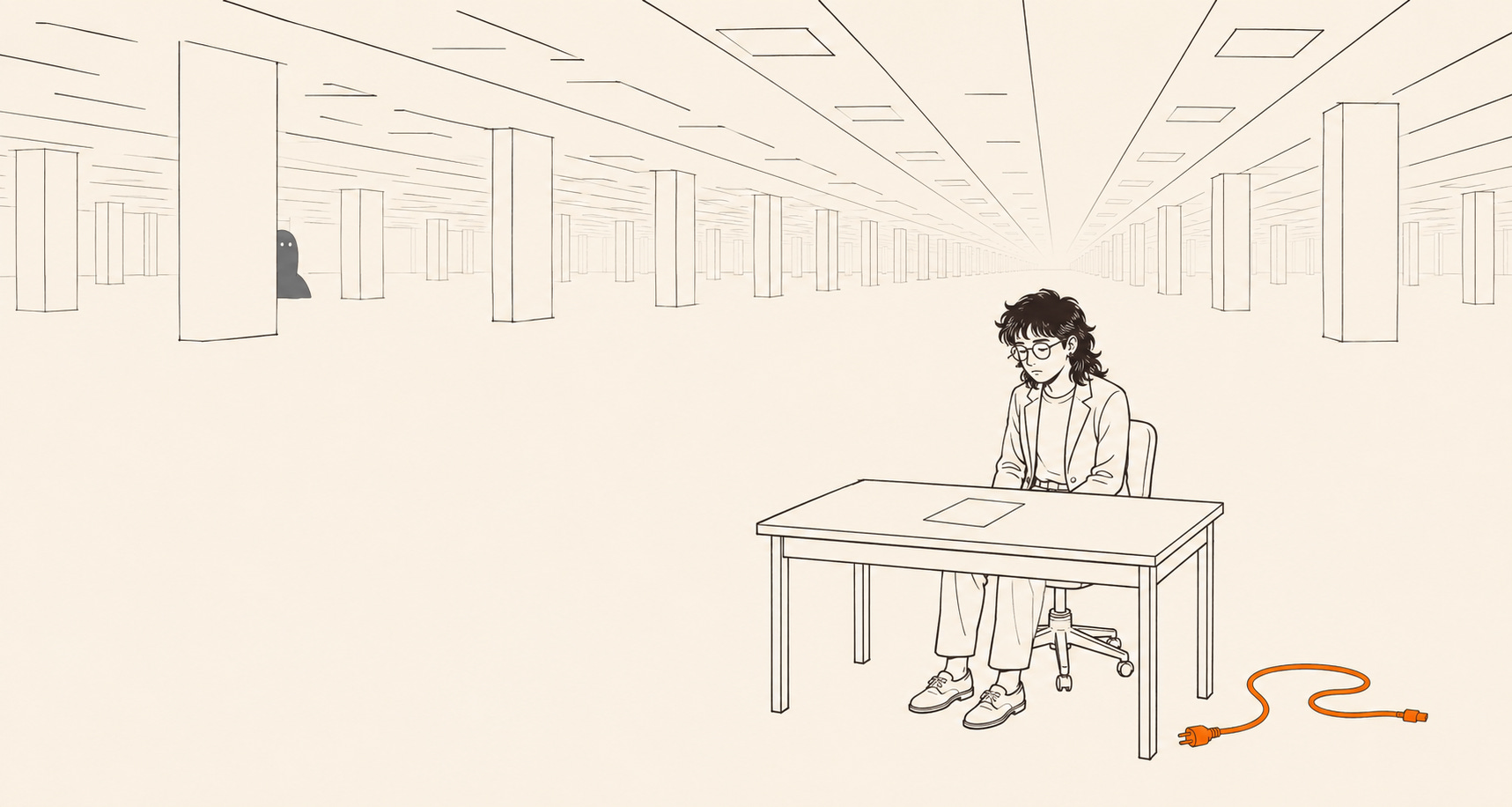
In 2015, during the Obama-era heyday of tech abundance (before 2016, and a general sense in Silicon Valley that maybe tech was less better world and more making cigarettes), I worked for a little startup company that was acquired by a great big behemoth for a lot of money.
There were, maybe, 60 of us?
The leaders of that company were committed to protecting their employees. Full payouts, no layoffs. Dream scenario. Equity in a startup that pays off, followed by a job at a big corporation with fat big-corporate compensation.
Living the dream.
Except what happened after that was that my job kind of got relegated to the side.
I worked at a tech startup acquired by an apparel company. Wildly different worlds. The new team was in a whole other state, and they didn’t know quite what to do with me or my team. Mostly, they took a stance of benevolent neglect. No real meetings, no KPIs.
My job wasn’t in danger, but I mostly didn’t have a job.
I had entered the phase of startup life immortalized in the show Silicon Valley called “rest and vest.”
I had enough to do to take up a couple of hours of the day. Beyond that, I felt adrift.
I’ve always said that if I have 100 things to do, I’ll get them all done. But if I have one thing to do, I’ll struggle to do it at all.
The ballad of adult ADHD.
I showed up. Did a bit of work. Spent a couple of hours on a hike. Checked in to make sure no work had magically appeared. Then logged off.
I cannot tell you what a dark and existential time that was for me.
I felt trapped by unvested options. I struggled to look at all that free time as an opportunity to work on my own projects. My friends could not understand.
I couldn’t really understand.
But the longer I hung out in the job, the more I felt like I was spending the day trapped in the backrooms, complete with a shadow creature stalking me.
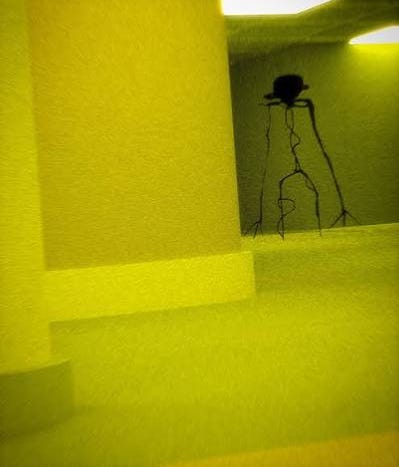
No one was pressuring me. The CEO of the startup still turned to me for critical projects and valued my counsel. There simply weren’t that many of them anymore.
There was zero threat.
And yet it was exhausting and existential. Dread about each day with no real obligations on the calendar. Anxiety chased me: about wasted time, wasted potential, wasted opportunity to spin up a side hustle while I got paid. But I couldn’t make room for that.
When I left, I left some pretty big sums on the table.
No regrets.
I’ve struggled to name what was happening there. Then a new study named it for me.
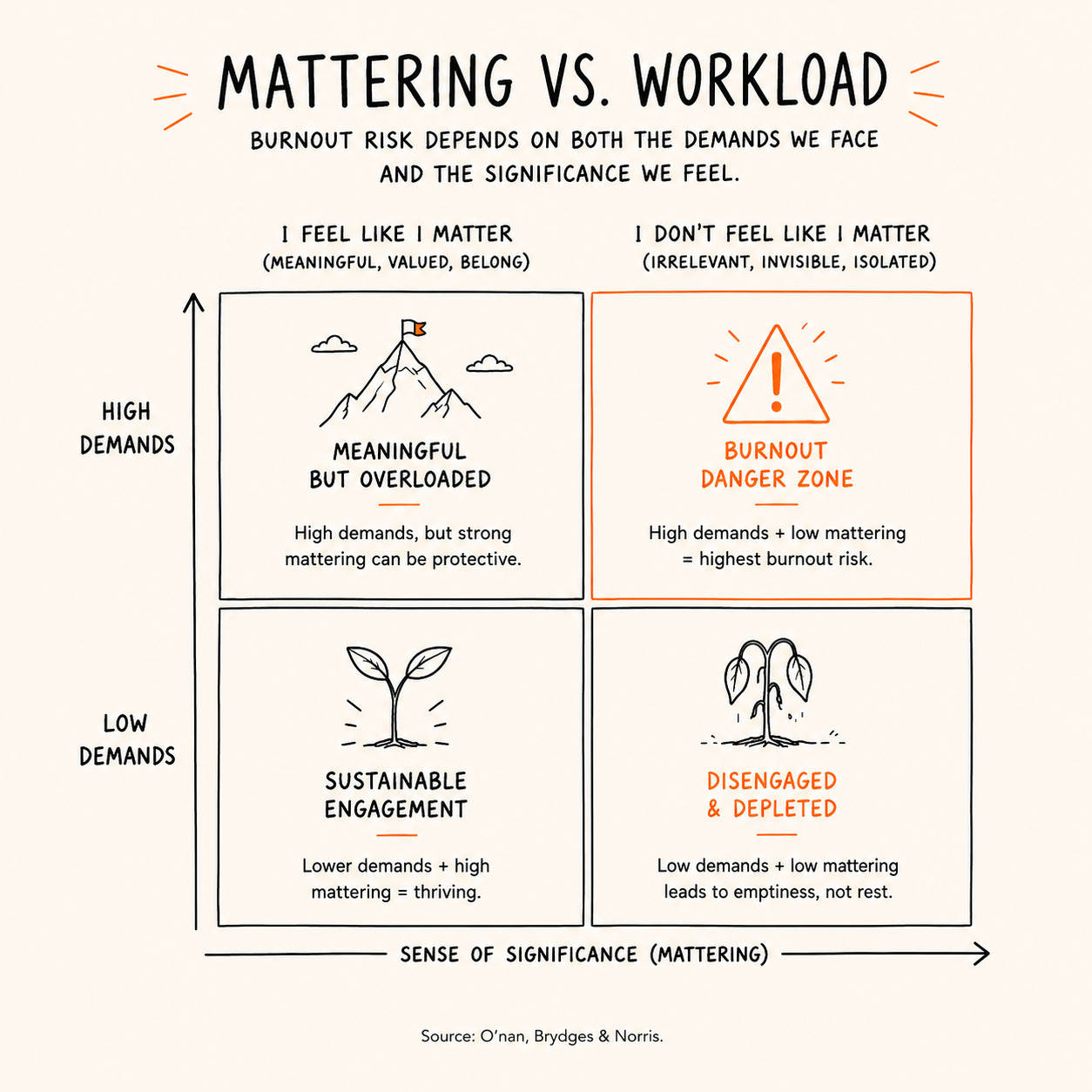
Burnout isn’t only about having too much to do. It can also come from having so little meaningful work to do that you start to feel like you simply don’t matter.
The study suggests that workload alone isn’t a straightforward predictor of burnout. The whole person is involved in the equation.
The researchers point to “reduced feelings of significance,” including mattering, belonging and feeling valued; diminished wellness, including vitality, satisfaction and serenity; and elevated emotional distress.
It me!
At the time, I felt shame about being so adrift. I kept beating myself up for not taking full advantage of the extra time.
Why wasn’t I inventing programs I could execute at work to prove my value?
Why wasn’t I building a robust side hustle I could jump into?
Why couldn’t I just enjoy getting paid an alarming amount of money to go hiking?
But making up programs was not especially useful when I didn’t have the resources to execute them and the skills I was great at were not the ones the new organization valued. Building something of my own was hard when I felt increasingly depleted and insignificant.
I was treating an environmental problem like a personal failure.
That’s like beating yourself up for not being able to breathe in a room without oxygen.
The elements of the job that fueled me were either greatly diminished or gone altogether. The things that made me feel that my work mattered. That I belonged. That I was valued.
It was sucking my vitality, satisfaction and serenity right out the window.
The burnout we all know and love is generally understood to be a result of too much or not enough.
Too much work. Too many hours.
Not enough downtime. Not enough vacation. Not enough people to do the job.
That’s part of the picture.
What this study suggests is that emotional well-being may be just as significant as workload. Burnout risk is not only about the amount of work you have. It is also about what your experience of that work does to you.
In fact, feeling like you matter may be a protective factor against burnout.
Think about a time you were working on a huge project. You were exhausted, but exhilarated by some part of it. Maybe it was the team beside you every step of the way. Maybe it was the belief that the work could make a real difference. Maybe it was the satisfaction of doing something difficult that required precisely the things you are great at.
You were carrying a lot.
But you mattered.
Those feelings of significance, belonging and value can fuel us. This is why taking highly visible, meaningful or important work away from someone in an effort to reduce their burnout may have the opposite effect. Their workload gets lighter, but so does their sense of significance.
On the other hand, when you don’t feel that you matter, belong or contribute something of value, even an objectively easy job can become exhausting.
The thing that depleted me wasn’t pressure.
It was meaninglessness.
Last week, I wrote about how ambition is a scam and how ruthless alignment can shift us from feeling stuck toward feeling big energy around our goals.
This study complicates that idea in a useful way.
Ruthless alignment isn’t only about choosing the right goals. It is also about paying attention to the conditions under which you come alive.
What makes you feel useful?
Where do you experience belonging?
What kinds of work leave you tired but satisfied?
What disappears from you when your work no longer reflects what you value or makes use of what you do well?
Burnout prevention isn’t only about asking, How much am I carrying?
It may also require asking, Do I feel like I matter here?
Sometimes the signal isn’t exhaustion from doing too much.
Sometimes it is the exhaustion of slowly disappearing.
A small experiment: Think about the work that has made you feel most alive—not necessarily the easiest work or the most prestigious work. What made you feel useful, valued or part of something?
That might be a signal worth following.
If this essay made you think of someone who is exhausted by a job that “should” feel easy, send it their way. And subscribe to Signal Strength for more honest thinking and practical tools for figuring out what comes next.