A client of mine once worked for a boss who would gas her up, tell her she was brilliant, and then deliver cutting remarks the second he felt stressed. He would create fire drills that required her to stop everything and clean up a mess, then imply that if she were better at her job, the mess wouldn’t have happened in the first place.
Another client recently left a job where she was perpetually undermined and dismissed. Not just overlooked or ignored, and not even receiving difficult feedback—actively undermined. Her boss left her team’s work out of presentations, made dismissive digs, and used passive aggression and the silent treatment.
She was expressing how frustrating it was to work without any affirmation, and she was blaming herself for internalizing that frustration: “How do you balance needing affirmation from other people versus giving it to yourself? Is it just human nature that you need it, or should I be more self-reaffirming?”
I hear this question a lot. Especially from women and those raised as women, who have been systematically conditioned to prioritize other people’s feelings over their own. It’s a question I’ve asked myself, too.
I’ve written before about how making someone else happy is a business metric designed to make you insane. In all areas of life, but especially at work, if the goal is another person’s emotional state, the goalpost always moves. You can’t control where it lands.
Years ago, I worked with a PR client who was dissatisfied with almost everything. No message, no strategy, and no result was ever “right.” I started to dread client calls. I felt heart-pounding anxiety that I would never figure it out.
Then, during a typical call, I looked at this man and realized something: he wasn’t unhappy with me. He was unhappy with everything. He was questioning his own product direction, his team’s engineering decisions, even the basic premise of the company’s vision. His dissatisfaction had nothing to do with me or the work my team was doing. If I set a goal of satisfying him, I would simply never achieve it.
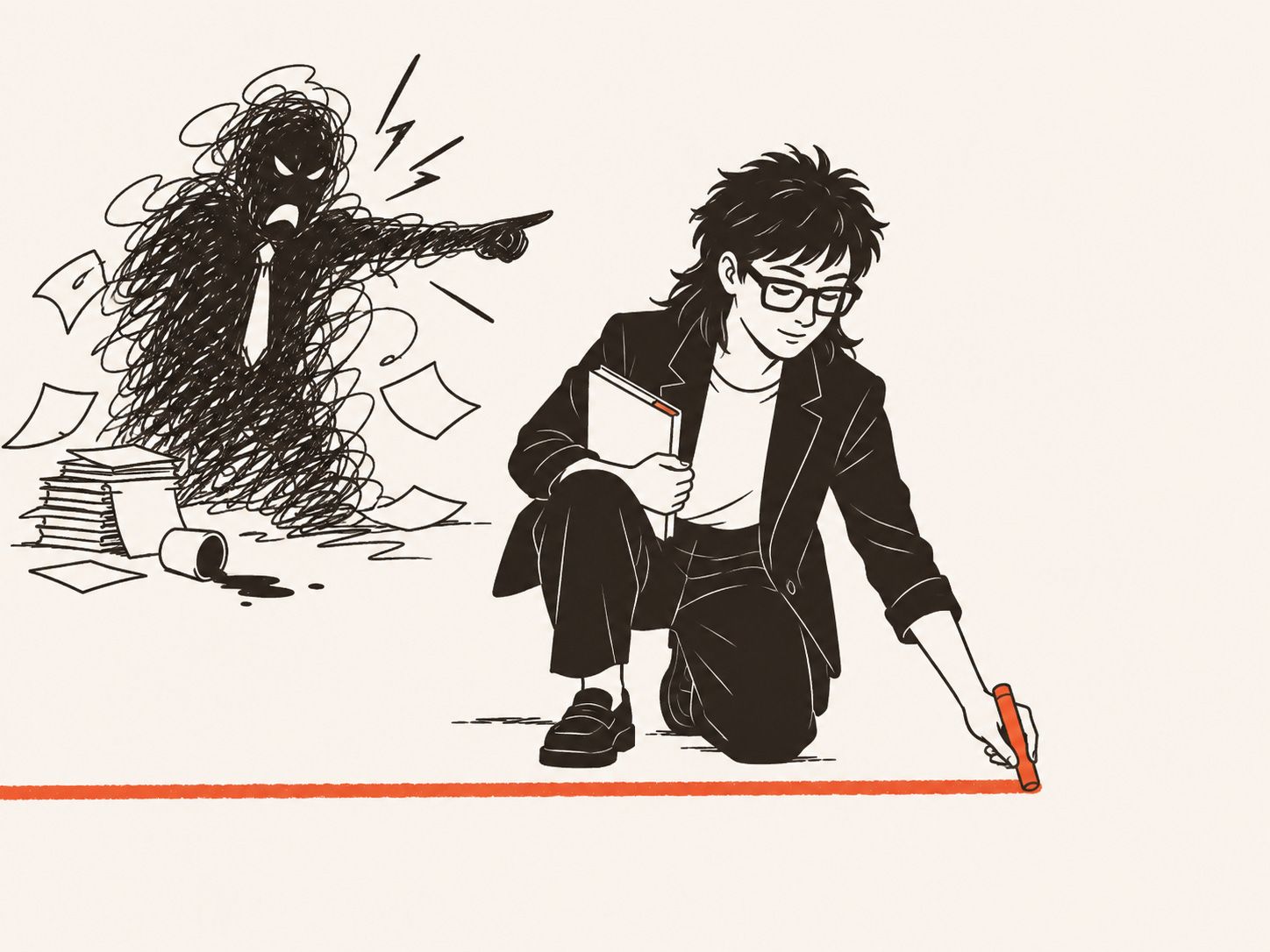
In that moment, I realized I would have to decide when the work was good enough, because he was never going to say it was.
It was one of those moments in real life that feels like a zoom-pan shot in a movie—where the character realizes Bruce Willis was dead the whole time. Everything shifted. I was in the driver’s seat. We had agreed to certain deliverables, which we fulfilled. We executed our contract, did good work (because my team always does good work), and then we moved on.
Wanting appreciation is not a character flaw.
Getting recognition for your work is a critical part of staying engaged and effective. You are not “dependent on affirmation.” You are a human being pouring a lot of your precious life into the work you do, and part of being a good boss is providing that feedback.
Critically, there is a difference between a boss who fails to affirm you and a boss who actively undermines you. The second one is not a problem with your work or a flaw in your personality, though it sure can feel like one. A confident, competent leader simply does not act that way. When a boss actively undermines you, it’s often because they are projecting their own insecurities all over you.
Sorry babe, you were being slimed.
If you step outside the system for a moment, if you put down the HBR articles on effective leadership and the MBA matrices and Lean Out, the setup starts to look absurd. There is an unspoken understanding that we’re not supposed to be fully human at work.
If you ask yourself right now, “Can I bring my whole self to work?” you might feel a real gut reaction—a tight chest or anxiety sweats. Why do we blame ourselves when basic human needs intrude on our striving to be a good worker?
We’re taught relentless individualism and complete self-sufficiency. Got feelings? Deal with those on your own time. Meanwhile, your brain is filled with mirror neurons. We are physically wired for connection, and our nervous systems are co-regulated by the people around us. No one wants to put in extra labor to maintain a regulated nervous system when their boss can’t manage their own.
You want to work for people who can appreciate your work and collaborate with you. You should want that.
What do you do when you realize your current situation is tearing down your self-esteem?
First, take a breath.
Second, do not freak out. Don’t talk sh*t. It will be so tempting. You will be looking around you, thinking, does anyone see this?? They do. But more importantly, you do. And you can trust your own gut.
Remind yourself this isn’t your fault. Then, start treating yourself like you would advise a friend:
Write down specific instances where your boss made you feel small.
What happened: “When I asked for feedback, he said, ‘I guess you’re ok at some things. We’ll see.’”
How you felt: Defeated, sad, small, silly for expecting more.
How this feedback helped you do better work: It didn’t.
Actionable insights: None.
Separate stories from facts. We can’t read minds. Let yourself off the hook for anything that wasn’t specifically said out loud. Listen only for actionable feedback, incorporate it when it makes sense, and leave the rest in your notebook.
Define “good enough” on paper. Write down the specific deliverables you promised, document the metrics involved, and track when you deliver them. Make a promise to acknowledge your own work, even if your boss cannot. Create the goalpost for yourself, and move it only based on agreed business outcomes—never on someone else’s mood swings.
Plan your exit. Once you know the environment isn’t right for you, start making room to leave.
Ambition (which, as I’ve written before, is a scam) under toxic leadership is a trap. The idea that if you just give enough or perform well enough, the system will finally grant you worth and rest. An undermining boss works in dark concert with your internal drive to achieve, triggering your body’s stress responses:
Fight: Rolling your eyes, making passive-aggressive comments, or feeling like it’s your job to get retribution.
Flight: Wanting to run by quitting loudly or fantasizing about abandoning your career entirely. Browsing flower farms for sale on Zillow.
Freeze: Numbing out, scrolling endlessly, or disengaging just to make it through the day
Fawn: Unconsciously abandoning your own needs to appease a threat, working harder the more they push, or desperately trying to get them to like you.
These responses are hardwired in your body. This isn’t an attitude, it’s survival. Don’t be hard on you.
When these kick in, your prefrontal cortex goes offline. Time to get it back.
Doing the concrete work of articulating your deliverables and documenting what you’ve accomplished brings your thinking brain back online.
When my team worked for that unhappy CEO, we had clear, agreed-upon deliverables. We delivered them, checked the boxes, issued the invoices, and moved on. Many job situations aren’t that clean, but you can always start by scoping your work in writing.
When you get detailed about what you’re actually doing, it’s no longer someone’s unstable opinion that defines “enough.” It’s the scope you defined.
You get to decide what’s good enough.