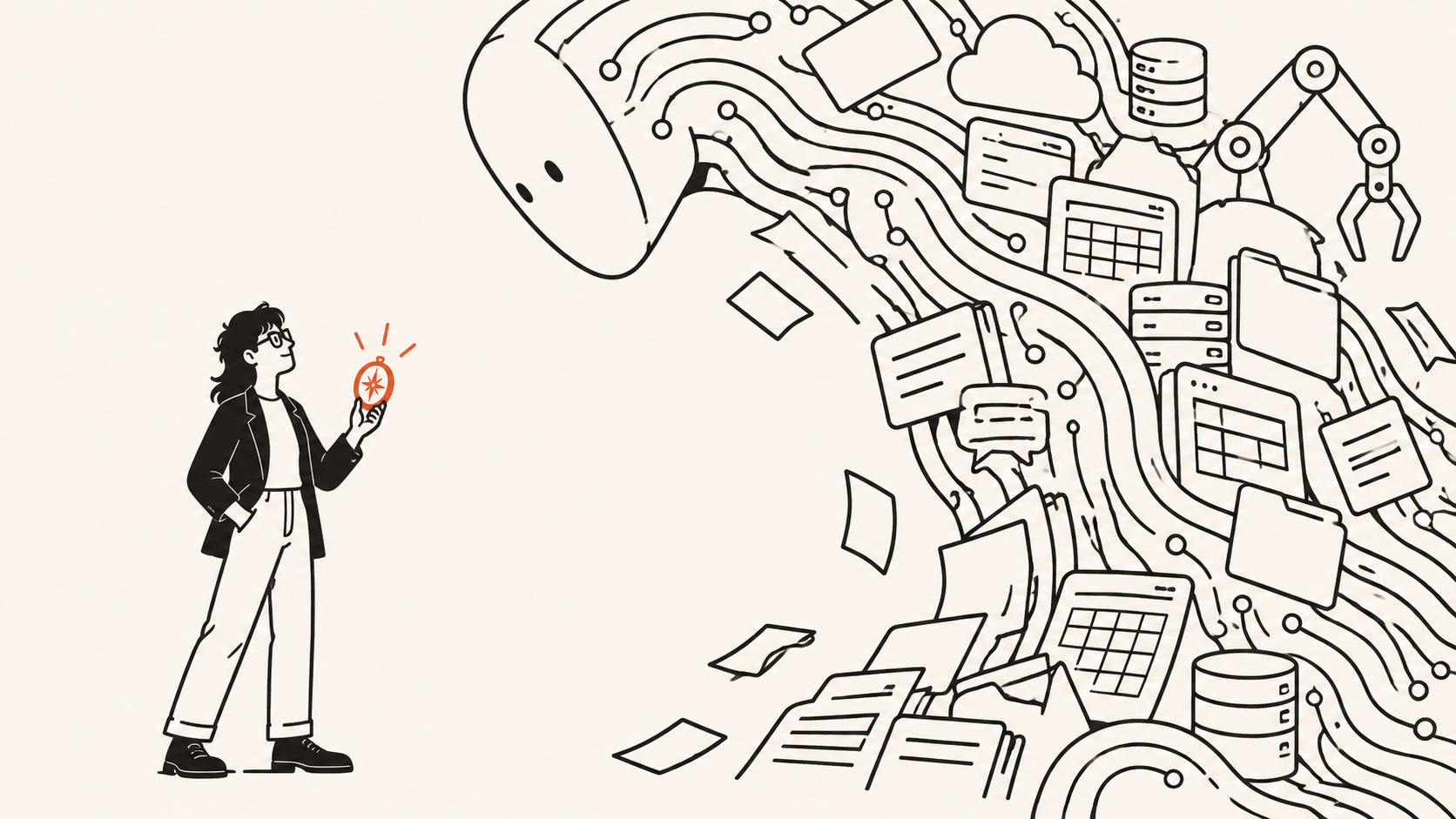
The new hotness is FOBO: The Fear of Being Obsolete.
I have clients right now who are haunted by the idea that their skills will become irrelevant overnight.
AI is changing everything about work, and it’s accelerating every day. I work for myself and have three different AI tools doing a million jobs for me—some jobs that I used to pay someone else significantly more than my $20 monthly fee to do. Dissecting the moral, economic, and environmental impact? Other people are doing this far better. Instead, let’s look at how this impacts human identity, work, and anxiety.
I think FOBO is an existential, body-level reaction to the vastness and uncanniness of AI. It’s not about being fired. It’s not even about a fear that you won’t be able to learn and use the endless march of AI tools. It’s something that hits at the identity level.
As I’ve thought about this topic, the first place my brain goes is to the pure absurdity of it all. You are a human being. In a human world. You are entirely unique and simply cannot be made obsolete. You matter, even if the way you are used to measuring mattering will change. This is part of why I believe that we all need to be doing some big, brave untangling.
At the same time, AI is not a monolith, and it’s infinitely available. Some stories just from the last few weeks from friends and clients:
A client is a brilliant creative marketer who has a general fear that AI might be able to do his job.
Meanwhile, Anthropic is hiring writers and brand creatives at a wild rate, because you know who can’t do that job? Claude. Not yet.
I have a friend who is a contract chief of staff at a very large tech company.
She taught herself how to use the company’s own AI tools to build an agent to automate some of the most frequent and tedious parts of her job.
Then the C suite found out - and were ecstatic -- because they wanted someone to build that very thing.
They didn’t have anyone building that thing but they knew they wanted it.
She is not an engineer. She’s an operations person with a background in marketing who had some time on her hands and got curious about what she could get AI to do for her.
Today, in 2026, big tech companies who are making the very AI tools that will, theoretically, take over all our jobs still haven’t figured out how to automate the tasks they want automated. Someone with some curiosity, a need, and some time on her hands built it for them.
A friend who is a professional ghostwriter channeled her own anxiety into curiosity and created an entire engine to capture and replicate people’s writing voice using AI. She taught herself how to turn her own extensive interview process into an engine you can plug into an AI tool. She let me be a beta tester. Her tool is aeons ahead of anything I’ve tried before.
Here’s the thing about our current AI world: It’s still the wild west, baby.
If your LinkedIn feed is anything like mine, it’s filled with people sharing custom Claude skills or showing off agents that automate deal flows. LinkedIn is the white hot center of FOBO. Just like Instagram influencers don’t live in a softly lit dreamland 24/7, people on LinkedIn are putting their best, most ambitious foot forward.
The truth is, the tools are everywhere, they’re cheap, and learning how to vibe code or create your own workflows only requires curiosity, patience and some time.
I believe to my bones that what makes you human will continue to be the most valuable and critical skill you can hold on to.
I was already writing this piece when a friend sent me ’s latest piece, which encourages us to take a rebellious stance:
The tech industry thinks they are the only ones who know what is right for AI. And to them the right path has been about replacing the human in everything and gleefully bringing on the job apocalypse. I say leave them to their fantasies.
She sees AI as a vast medium with endless possibilities, and calls for an emerging counterculture that only humans can create. I cannot properly summarize but you should read it, here. I will tell you how it made me feel: excited, intrigued, hopeful.
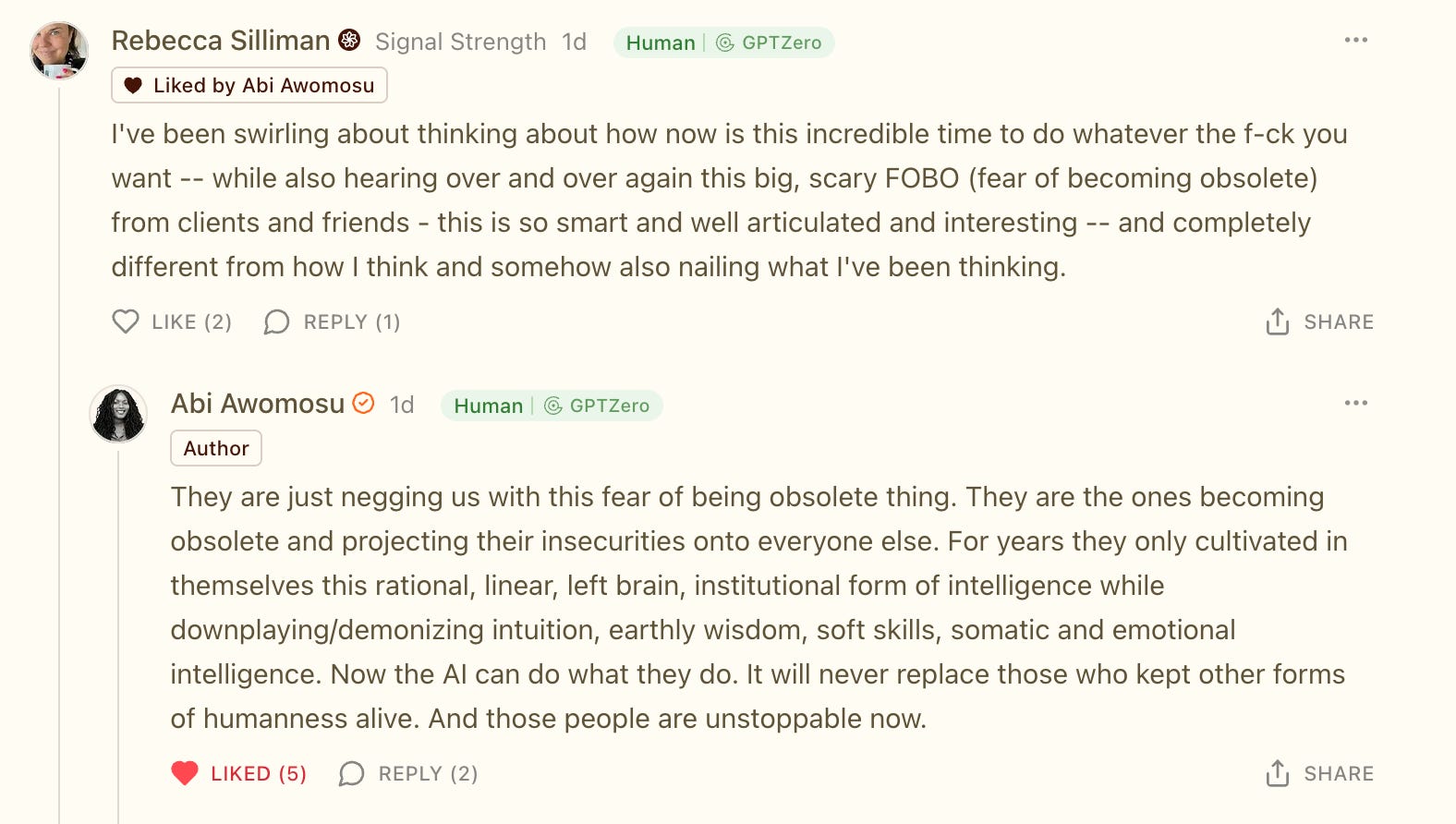
Then she put perfect words to it:
Three Cs to Combat FOBO
As Abi says, keep your forms of humanness alive.
First, cultivate curiosity
Curiosity is the antidote to fear.
When we’re experiencing big, broad, anxieties like FOBO, we’re watching a movie play out on our inner IMAX screens, a post apocalyptic hellscape where marketing pros wander the streets looking for scraps.
When you turn away from your own projections and start asking questions, it’s an immediate mindset shift.
It’s never been easier to follow your curiosity about technology. To teach yourself to build something. To read a book or reach out to someone you respect.
It might lead you to build something that changes your career in real time.
Or it might lead to the second c: connection.
Construct connection
Lately, I’ve been giving coaching clients assignments based on ’s project of reaching out to 100 people in 100 days. I call these “curiosity conversations” It looks like this:
List people you are curious about — not just people who can lead you to a specific place.
Include people you already know, but don’t stop there — include in this list people you’ve admired from afar: people whose careers have fascinated or impressed you, people whose writing or art or teachings you love. People who have done things that have moved you. People who seem terrifying to reach out to - include those, too. Who are your dream coffee dates? Moonshots.
Don’t talk yourself out of anyone. If you clench up thinking about it — put them on the list.
This isn’t just about networking, although, sure. It’s networking. It’s about actively pushing back against the isolation inertia inherent in our modern world. We spend so much time looking at screens, digging ruts into the ground with our routines, driving cars, slapping headphones on, we need to purposely create chances to be surprised. To find new information. To remember what it’s like to talk to someone you don’t talk to every day.
This is where new ideas come from. This is how we, as says, increase our surface area for luck.
Channel creativity
Make something.
Last year I made this painting -- it’s watercolor with tiny gel ink circles. It’s 18” x 24”. It took me approximately 60 hours to make. (Seriously questionable decision, ergonomics-wise. You can zoom in and see the tennis elbow.)
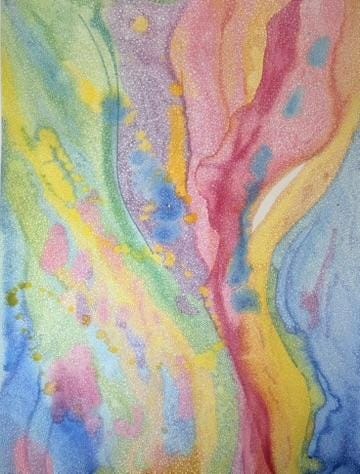
I am not someone who is a trained artist, but I like to make stuff. I thought it was cool, so I submitted it for a show and it hung in a gallery -- but when I started to think of the art as something I was doing to fit a market -- to sell, to build a reputation around, I went from feeling like I was creating cool stuff as an expression and experiencing a wonder around how it comes together -- like pulling something out of the air -- I started to feel small and overwhelmed and silly.
Where the actual, big value is in creating something: the act of creation itself. Creating connects us to our humanity, shifts how we view the world, and opens up room for big ideas to take root.
If you’re feeling that FOBO creeping in this week, let’s make the comment section an active antidote. Tell me: What is one weird, curious project you’re working on—or wanting to start—purely for the sake of doing it?